Kitchen Tools
Zaru: The Bamboo Colander Behind Zaru Soba (and Why Most Kitchens in Japan Use the Plastic One Instead)
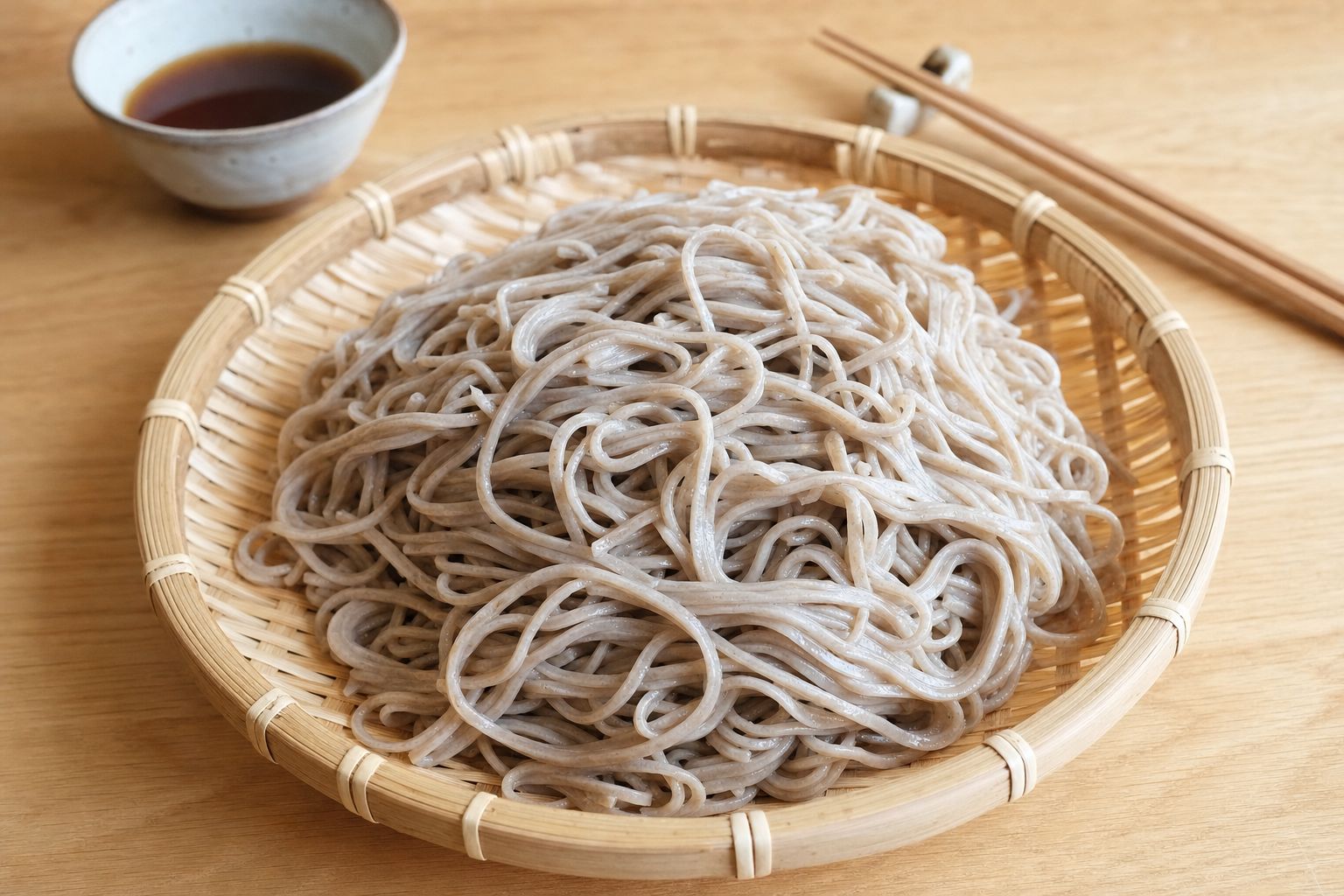
Order zaru soba at a soba shop in Japan and the dish arrives on a shallow, woven basket instead of a bowl — cold noodles, a little water still clinging to them, resting on something that looks more like a serving tray than a strainer. That basket is the zaru, and it’s the reason the dish is called zaru soba in the first place: soba served on a zaru, as opposed to kake soba, which comes swimming in hot broth in an ordinary bowl.
On a basket. Not in a bowl.
The short version: a zaru is a shallow, round, woven basket — traditionally bamboo, now also stainless steel and plastic — used for draining, rinsing, and serving. It’s one of the oldest, least glamorous tools in a Japanese kitchen, and almost every household in Japan owns at least one. The bamboo version is the one that ends up in cooking shows and gift catalogs, but it’s not the one doing most of the actual draining in most homes. That’s a cheaper, less photogenic basket, and there’s a real reason for the split.
What a zaru actually is
Strip away the soba-shop presentation and a zaru is just a draining basket, the same job a colander does in a Western kitchen. Rinse rice before cooking it, drain blanched spinach, wash grapes, cool down noodles straight out of boiling water — all zaru jobs, all day, in every kitchen in the country. The shape varies by use. A deep one looks close to a colander. A shallow, wide one — the kind associated with soba — is built to spread noodles into a thin single layer so they cool and firm up fast instead of clumping into a warm, starchy mass at the bottom of a bowl.
Bamboo is the traditional material, split into thin strips and woven into a mesh tight enough to hold rice grains but open enough to drain fast. The weave itself does something a solid-walled colander can’t: water sheets off the uneven bamboo surface instead of beading and clinging the way it does on smooth plastic or metal, so noodles drain and separate more completely. That’s also why bamboo got paired with cold noodles specifically rather than everything else in the kitchen — the surface that helps water let go of a woven basket also helps a noodle let go of its neighbor, which matters a lot more for soba you’re about to eat cold than for rice you’re about to cook anyway.
Why most Japanese kitchens quietly skip the bamboo one
Here’s the part that most English-language write-ups on zaru leave out, because they’re usually written to sell the pretty version: bamboo is a genuine chore to keep alive.
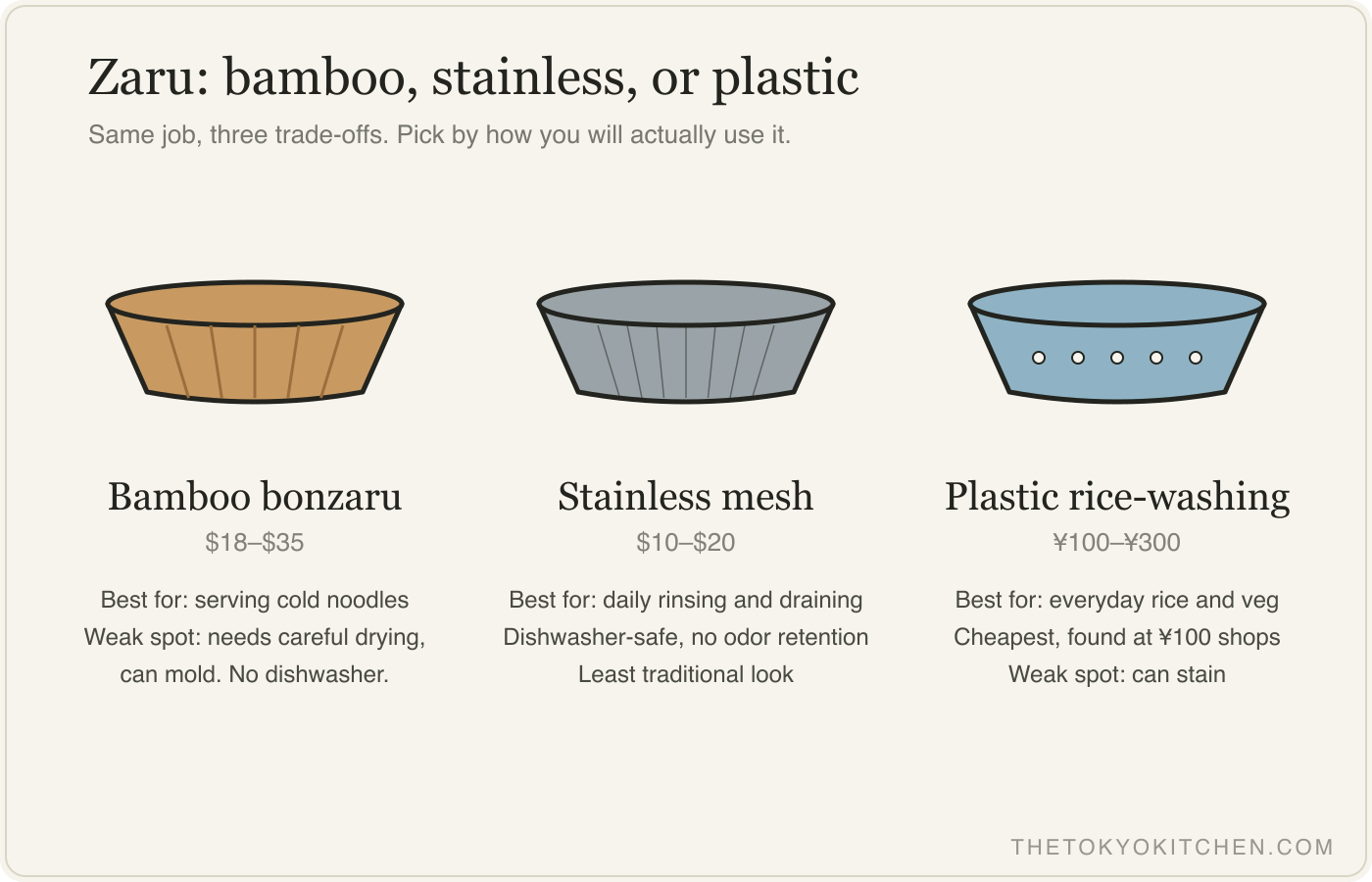
It can’t go anywhere near a dishwasher. It can’t sit wet on a drying rack face-down, because that traps moisture against the weave and that’s exactly how mold gets started between the strips, in the gaps you can’t see into and definitely can’t scrub. Dry in direct sun too often and it cracks. Leave food residue in the weave and it stains, permanently, in a way a stainless mesh just doesn’t. None of this makes a bamboo zaru a bad object. It makes it a specific kind of object — one that earns its keep when you’re actually serving cold noodles for guests, and sits there as dead weight the rest of the year if that’s not a thing you do often.
That’s the honest reason a plain stainless or plastic zaru is what’s actually doing the rinsing-rice-and-draining-vegetables work in most Japanese homes, bamboo one or not. Stainless mesh goes in the dishwasher, doesn’t hold odors, and doesn’t care if it dries flat. Plastic is what’s stacked three-deep at a ¥100 shop, costs next to nothing, and is what most people reach for fifty times before the bamboo one comes out even once.
The soba connection, and why this matters right now
Soba shows up on a bamboo-style zaru specifically because it’s cold noodles, and cold noodles are the one use case where the material actually earns its reputation instead of just looking good. It’s also the reason this basket is worth knowing about this time of year rather than, say, in July: toshikoshi soba, the bowl of soba eaten on New Year’s Eve across Japan, is a tradition built on symbolism that’s a little more charming than most food folklore. The noodle is long and thin, read as a wish for a long life. It’s also easy to bite clean through, which gets read as cutting cleanly away from the old year’s troubles instead of dragging them into the next one. Historical accounts put its roots somewhere in the Edo period, with one version tracing it back further to a temple handing out soba to the poor at year’s end — the stories don’t fully agree, and most of what’s repeated about its exact origin should be read as tradition rather than settled history.
None of that requires a zaru specifically. Most accounts agree toshikoshi soba is more commonly eaten hot, in broth — kake-style rather than on a zaru — though there’s no actual rule, and some regions and households do it cold. But December is also, not coincidentally, when a lot of households outside Japan start looking up “how do I actually serve soba” for a New Year’s dinner of their own, and if yours ends up on the cold side, the basket is what makes it work at all. Dump hot, just-boiled noodles straight into a bowl without draining and rinsing them properly and they turn gluey in minutes. A zaru, bamboo or not, is what gets you from “pot of boiling noodles” to “noodles that don’t stick to themselves on the way to the table.”
What this actually costs
| Type | Example | Roughly | Who it’s for |
|---|---|---|---|
| Plastic rice-washing zaru | Any supermarket or ¥100-shop basket | ¥100–¥300 (about $1–$2) | Everyday rinsing and draining; what most kitchens actually use daily |
| Stainless mesh colander | Standard 18-8 stainless, any kitchen brand | $10–$20 | Dishwasher-safe daily use, no odor retention, the realistic upgrade |
| Bamboo soba-size zaru (bonzaru) | A woven bamboo basket in the 24–27cm range sold for serving noodles | $18–$35 | Serving cold soba or udon the way a shop would plate it |
| Hand-woven specialty bamboo | Craftsman-made, regional bamboo (Sado Island is one source) | Priced per piece, no fixed listing | Buying the object, not just the function |
Nothing here is an expensive purchase by Japanese-kitchen-tool standards. Even the specialty hand-woven versions sit well under what a decent otoshibuta drop lid or a mid-range knife costs.
Care, if you do buy the bamboo one
Rinse it under running water right after use, working any stuck rice or noodle bits out of the weave with your fingers or a soft brush rather than soap — bamboo doesn’t need detergent, and some guides specifically warn against it. Dry it standing on its edge or hung up, with air reaching both sides, never stacked flat and wet inside another bowl. Keep it out of direct, prolonged sun, which is what actually cracks the strips over time rather than normal kitchen use. Do all of that and a bamboo zaru lasts for years. Skip the drying step even occasionally, though, and mold in the weave becomes the realistic outcome rather than some rare worst case.
The honest recommendation
Buy the bamboo one if you’re actually going to serve cold noodles the way a soba shop does, or if the look of it matters to you for a specific New Year’s dinner — it’s a genuinely nice object, and it’s cheap enough that it’s not a real financial decision either way. Skip it if what you actually need is something to rinse rice and drain vegetables on a random Tuesday, because that job belongs to the stainless or plastic one sitting in every ¥100 shop in the country, and bamboo stored badly for eleven months a year is worse than no bamboo at all.
It’s the same logic that applies to the otoshibuta sitting on top of the simmered dishes it’s built for or the donabe a lot of those same winter meals get cooked in: unglamorous, genuinely old, and worth very little money compared to what people assume. If you’re building out a Japanese kitchen one tool at a time, a knife and the rice you’re rinsing before it ever reaches the cooker are the things that change your cooking more. A zaru is just the basket that quietly makes the rest of it work.
Quick recap: zaru soba is named for the basket, not the other way around. Bamboo drains and separates noodles better, but it’s a chore to keep clean; stainless and plastic are what’s actually doing the daily work in most Japanese kitchens. If a New Year’s soba dinner is on your calendar, the basket is the one piece of equipment that’s genuinely worth having before the noodles hit the pot.
Osomatsu! (It was nothing.)
— Sen
Want the short version?
The One-Knife Kitchen: how to choose and care for the single Japanese knife that replaces the block — free, printable, one page.
Get the free guide →